We can help fragile marine species and ecosystems recover and thrive
Oceans are vital to human survival and contribute to our prosperity and quality of life. They produce more than half the world’s oxygen and are the largest carbon sink. And they offer yet unknown potential for medical discoveries.
But we know more about Mars than the immense scope of ocean life here on Earth. We’ve only explored about five per cent of the underwater world. Less than a half-century ago, no one imagined the multitude of species that could live around deep-sea hydrothermal vents.
Oceans cover 71 per cent of Earth’s surface and hold 99 per cent of its biosphere. We scarcely understand them, so we better pay closer attention to what we do with them.
Scott Wallace, Former Senior Research Scientist
Canada’s fascinating, surprising and diverse oceans
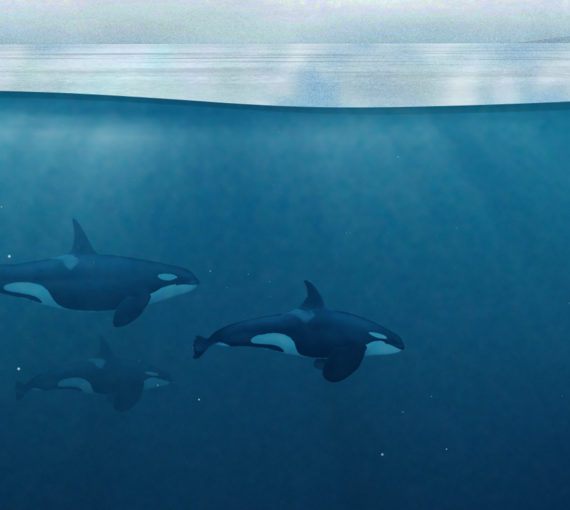
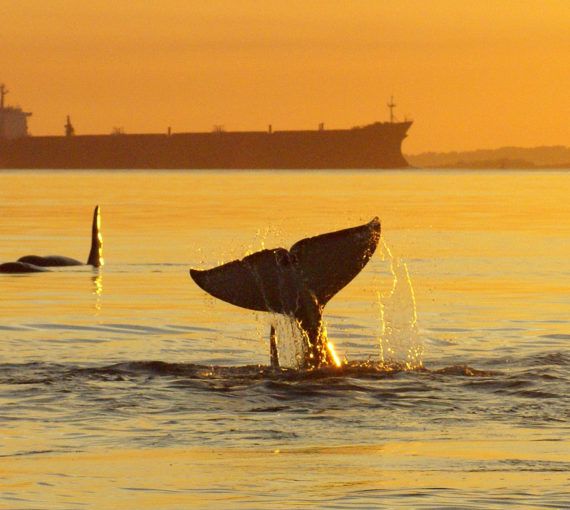
Swaying sea grasses, massive Chinook salmon, leaping orcas, treacherous icebergs, teeming estuaries, mysterious glass sponge reefs, colourful nudibranchs, spawning herring, bubbling humpback whales, blooms of plankton, tufted puffins, steaming hydrothermal vents… the list of wonders found in Canada’s marine ecosystems could stretch on forever.
With the longest coastline in the world, Canada holds a global responsibility to steward its vast marine environment.
Ocean facts
Fascinating
A drop of sea water typically contains millions of viruses and bacteria.
Surprising
Canada’s coastal waters are home to hydrothermal vents, glass sponge reefs, coral, blue whales, blue angel sea slugs and ‘electric’ torpedo rays.
Diverse
Canada has the world’s longest coastline and is one of only two countries that borders three oceans. (The other is Russia.)
Our work
Bringing together sound science and public education, we work to protect and restore coastal ecosystems.
Expert views
We need a ‘blue’ economy to revive our ailing oceans
A blue-economy strategy must prioritize conservation and restoration to ensure healthy marine ecosystems can sustain marine life, and human dependence on marine resources, for the long term.

Guest authors
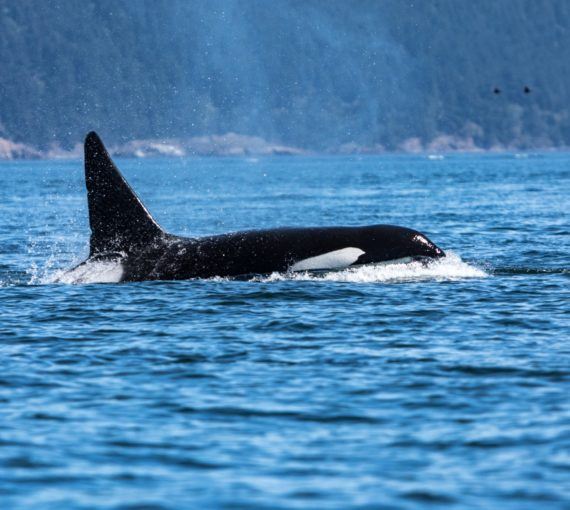
Salish Sea orcas and Chinook nearly absent this season
Sightings of the iconic southern resident orcas have been few and far between for the second year in a row. Just as last year, the whales seem to be mostly staying out of the Salish Sea. Is this the new normal?

Former Senior Science and Policy Analyst
Canada’s high-stakes herring fishery gamble
Fisheries and Oceans Canada is gambling with a public resource when it comes to herring fishery management. Herring populations are so important yet so variable that managing them in a conventional way is too risky.
Former Senior Research Scientist
The mighty Fraser River and its once abundant salmon are on the edge
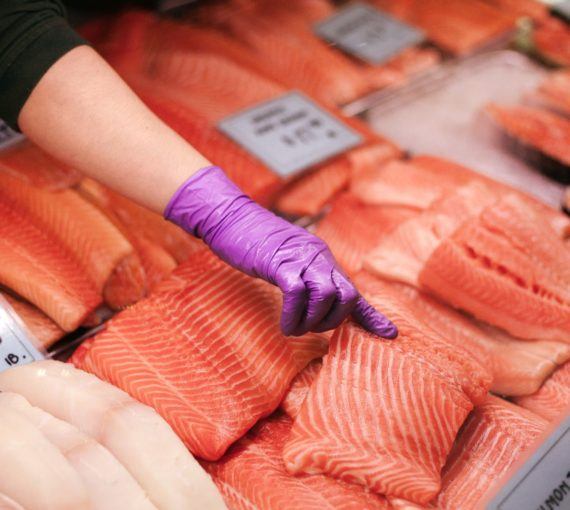
Fraser River Chinook salmon are declining rapidly. To safeguard them, the federal government must work with Indigenous communities and stakeholders to create and implement emergency recovery plans. The well-being of our communities, as well as many species in the food chain, depend on it.
Former Senior Science and Policy Analyst