Biodiversity is declining worldwide
Species at risk are the plants and animals that may disappear unless human beings step in to help. More than 50 per cent of Canadian wildlife species are currently declining. They need protected habitat to survive, and we’re not giving it to them.
Although we have national laws to protect and restore habitat, we continue to allow activities that put species and their habitats at risk, such as clear-cut logging, mining, trophy hunting, large-scale dams, oil, gas, industrial agriculture and more.
The good news is that when we have convinced government to take measures to protect critical habitat, we have seen a turnaround in wildlife numbers. That means there is hope, but we need to stay vigilant and keep up the public support for our most vulnerable species.
Since 1970, globally
Terrestrial species
Terrestrial species have declined by 39 per cent.
Marine and freshwater species
Marine species have declined by 39 per cent and freshwater species have declined by 76 per cent.
Wildlife populations
Wildlife populations have declined globally by an average of 58 per cent since 1970. This is projected to reach 67 per cent by 2020.
Endangered species in Canada
Today, 521 plant and animal species are considered at risk under Canada’s Species at Risk Act.
Ensuring their survival is critical to the health, well-being and prosperity of our generation and those to come.
Federal Species at Risk Act
The federal Species at Risk Act was passed in 2002 with the goal of preventing wildlife species from becoming extinct and implementing the measures needed for their recovery. It gives legal protection to wildlife and the habitat they need to survive. The problem is that in the vast majority of cases, Canada continues to fail to protect that critical habitat, which means that species don’t have the chance to recover. A 2014 study found that the situation for 86 per cent of species listed as at risk under SARA has either stayed the same or gotten worse.
Provinces and territories also have their own species at risk legislation. However, the fate of their species at risk tends to look just as grim. An Ecojustice report card found that, “across the board, Canada’s federal, provincial and territorial governments are doing an abysmal job protecting our at-risk species and the habitat they need to survive and recover.”
The David Suzuki Foundation works to engage governments on species at risk, encourage them to take greater action and mobilize public support for habitat protection before species at risk are gone forever.
Caribou need our support
Help protect caribou habitat before it’s too late. Call on Canada to take emergency measures for caribou now!
How to turn things around for species at risk
For threatened species to recover, governments must take four steps.
Listing species as endangered
Specific threats facing each species must be identified and factored into their protection.
Identifying critical habitat
Governments must outline the minimum area required for species to survive.
Taking on-the-ground efforts
Concrete action is needed to ensure that sufficient habitat is restored and maintained.
Keeping public informed
Recovery plans should be available for all Canadians to see and speak out on.
Hope in action: The snapping turtle
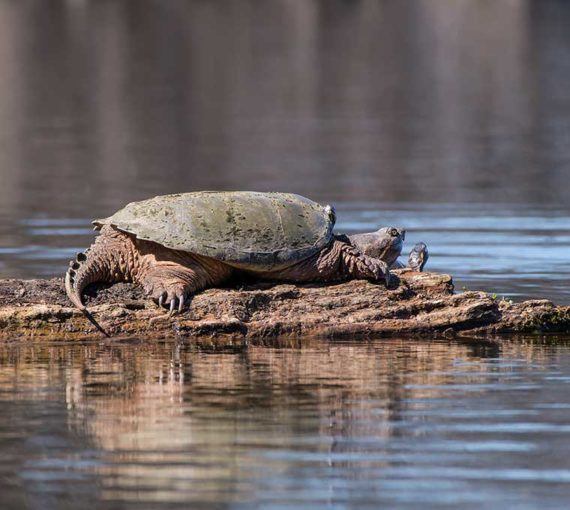
Ending the hunt of a threatened species
The snapping turtle is Canada’s largest freshwater turtle. It is also listed as a species of “special concern” under the Ontario Endangered Species Act. The hunt for snapping turtles in Ontario was putting them at even greater risk. After successful campaigning by the David Suzuki Foundation and partners, the Ontario government announced in April 2017 the end of hunting for at-risk snapping turtles in the province.
Ontario Endangered Species Act at risk
The Government of Ontario has made it clear that its primary objective in addressing habitat conservation is not to ensure efficient recovery for Ontario’s at-risk species but, rather, to find even more efficiencies for industries that want to operate where these animals and plants live.
The David Suzuki Foundation is working to ensure that the province does more to change business-as-usual activities that drive wildlife decline, not pave the way for them.
Related projects
Always grounded in sound evidence, the David Suzuki Foundation empowers people to take action in their communities on the environmental challenges we collectively face.